OnyxProductivity

The problem defines the solution.Not the other way around.

Industrial efficiency & digitalization consulting

We help industrial teams work faster, with less waste.

Onyx Productivity partners with manufacturing and industrial businesses to find where time and capacity are being lost, then fix it — through productivity diagnostics, digitalization roadmaps, custom AI tools, and hands-on continuous improvement.

Operations, business, and technology in one team.

  • 10+years of experience
  • 30+projects delivered

We're a boutique consultancy specialized in productivity and operational transformation. We combine experience in continuous improvement and Lean, knowledge of logistics and supply chain, and the ability to build software and apply AI.

We work with organizations that have real efficiency problems and need to improve how they operate — without taking on the structure, cost, or complexity of a large consultancy.

Our focus isn't selling a methodology or a technology. It's understanding what's holding the operation back and solving it with the right tool.

Sectors and operations

  • Industrial and manufacturing companies.
  • Logistics, distribution, transport, and supply chain.
  • Service-sector companies with operational improvement and digitalization needs.

How we work

  • General management, operations, plant, and digitalization leads.
  • A mostly remote working model, complemented with on-site presence when the project requires it.
  • Based in Madrid, with reach across Spain and Latin America, and the capacity to support projects nationally and internationally.

How we create value

The answer starts with understanding the problem.We design solutions tailored to fit.

01

We understand the real problem

We start from the operation, the processes, and the data to understand what's happening and what's limiting performance. We don't apply standard solutions: every intervention starts from the organization's actual reality.

02

We design a proportionate solution

We look for impact before complexity. We adjust the scope and the intervention to fit the problem, avoiding oversized solutions. Not every problem needs a big project.

03

We combine operations and technology

Lean, digitalization, automation, software, and AI are tools. We use and combine whichever ones create value in each case, without introducing technology or methodology for its own sake.

04

Results-oriented

We want every project to end in a concrete, measurable improvement aligned with the organization's objectives. We can support the full journey, from understanding the problem and defining the solution to implementing it and measuring the result.

Service catalog

A focused set of services for industrial and manufacturing teams — each one scoped to fit the size of the problem.

Express productivity analysis

An objective view of the operation to cross-check information, identify opportunities, and guide decisions.

What's the situation?

A diagnostic doesn't need to start from a problem — it's a way to get an objective, evidence-based view of how the operation is really running.

An operational diagnostic doesn't necessarily start from a problem.

It can be carried out to gain a more objective understanding of how an operation is running, cross-check perceptions against data, validate existing information, identify improvement opportunities, or build a solid foundation before making decisions.

It's also useful when specific issues exist — productivity losses, delays, bottlenecks, coordination problems, or capacity constraints — and it's necessary to analyze what's happening and what might be causing it.

The goal is to have an independent, well-founded view of the operation — both to confirm what's working and to spot where there's room for improvement.

When does it make sense?

Before a big decision, to cross-check data against perception, or whenever deviations need a deeper look.

When you want an objective view of how an operation is running.
When you need to cross-check perceptions, metrics, or existing information.
Before making significant decisions about processes, capacity, organization, or investments.
When you want to identify and prioritize improvement opportunities.
When deviations or problems exist and their causes need deeper analysis.
As a starting point before launching an improvement or transformation initiative.

What do we do?

We cross-check the information available and analyze the operation to build an independent, structured view of how it's performing.

We analyze the operation to provide a structured, independent view of how it's running, what factors are shaping its performance, and where there's room to act.

We cross-check the information available, analyze the processes, and look for evidence that confirms or challenges existing assumptions.

The goal isn't to find problems for the sake of it, but to provide the information and judgment needed to make better decisions.

How do we do it?

A tailored mix of interviews, data review, and direct observation, cross-checking operational knowledge against the numbers.

We tailor each diagnostic to the goal of the analysis and the characteristics of the operation.

We place special importance on the available data and the knowledge of the people who work directly with the processes. Interviews help us understand the context behind the metrics, while data helps cross-check perceptions and provide an objective basis.

Analysis of processes and workflows.
Review and analysis of data, metrics, and documentation provided.
Interviews with managers and people involved in the operation.
Cross-checking quantitative information against operational knowledge.
Direct observation of processes when it adds value.
Methods and time analysis.
Analysis of productivity, capacity, and workload.
Identification of waste, variability, constraints, and bottlenecks.
We review the information from different angles to identify relationships, patterns, or opportunities that might not be obvious in a standard analysis. The approach and depth are adjusted to each diagnostic.

What do we deliver?

Key findings, a cross-check of perception vs. data, and a prioritized roadmap of quick wins and next steps.

The final content depends on the scope and goal of the diagnostic, but it can include:

Operational status and key findings.
A cross-check between perception, data, and observed performance.
Strengths and aspects worth keeping.
Problems or limitations identified, if any.
Improvement opportunities and root-cause analysis when needed.
Relevant metrics and evidence.
Quick wins

Immediate actions when clear, low-complexity opportunities are identified.

Prioritization

Ranking opportunities by impact, feasibility, and effort required.

Roadmap

Action lines and next steps derived from the prioritization.

The intent is for the diagnostic to end not just in conclusions, but in something that supports decision-making and next steps.

What result can you expect?

More information and judgment to decide with confidence what to keep, what to improve, and where to act.

An independent, well-founded view of the operation that lets you confirm, challenge, or complement the information available and make decisions with better judgment.

Validate how the operation is running and performing.
Identify opportunities that weren't obvious.
Confirm or rule out hypotheses and pinpoint the causes of specific deviations.
Spot actions that can be implemented quickly.
Prioritize improvement opportunities.
Have a roadmap to guide next actions.
ResultMore information and judgment to decide what to keep, what to improve, and where to act.

Example projects

From a full plant diagnostic to a focused bottleneck, capacity, or methods-and-times analysis.

A global diagnostic or independent review of a plant or operational area.
Productivity and capacity analysis.
Methods and time analysis.
Review of production, logistics, or administrative processes.
Cross-checking of metrics, hypotheses, and operational performance.
Identification and prioritization of improvement opportunities.
Analysis of bottlenecks and capacity constraints.
Analysis of workload and resource utilization.
A diagnostic ahead of an investment, operational change, or continuous improvement initiative.

Digital assessment

Assess the operation's digitalization level, identify its potential for evolution, and define the steps to move forward.

What's the situation?

Before deciding what to automate or where to apply AI, you need to understand how processes and information really work today.

Digital transformation isn't just about adopting new tools. Before deciding what to automate, what to integrate, or where to apply artificial intelligence, you need to understand how the processes currently work, how information is generated and flows, and what digital capabilities already exist.

The assessment reveals an operation's digitalization level, benchmarks its current state, identifies opportunities to evolve, and evaluates how much potential specific activities, processes, or information flows have to be improved through technology.

We analyze both the existing capabilities and the limitations and dependencies that could shape future digital initiatives.

The goal is to have a structured view of the organization's current digitalization level and its potential to evolve, avoiding technology initiatives launched without first understanding their feasibility and requirements.

When does it make sense?

When you need to know your real digitalization level before investing in automation, integration, or AI.

When you want an objective read on the current digitalization level of an operation, area, or process.
When you need to identify what digital capabilities exist, which are missing, and which are worth developing.
When several digitalization options exist and you want to know their potential, difficulty, and feasibility before deciding which to pursue.
When you want to assess whether the organization is ready to move toward greater integration, automation, or artificial intelligence.
Before making significant technology investments, when you need to understand which initiatives make sense and which dependencies need to be resolved first.
When you want to define a Digital Transformation Plan that sequences the organization's evolution by phase and priority.

What do we do?

We analyze processes, systems, and data flows to turn a general digital ambition into a concrete evaluation of capabilities and priorities.

We analyze processes, systems, data, and information flows to assess how technology is currently being used and what possibilities exist for evolving it.

We study different dimensions of digitalization: how information is recorded, how it's transmitted, how the operation is controlled, what visibility exists, which systems are connected, and which activities have potential for automation or more advanced capabilities.

For each opportunity, we don't just weigh its technological appeal. We also analyze its potential value, the difficulty of execution, existing dependencies, and the level of readiness needed to take it on.

The goal is to turn a general "we want to go digital" ambition into a concrete evaluation of capabilities, opportunities, and transformation priorities.

How do we do it?

We map how information is recorded, shared, and controlled today, then assess the feasibility of each opportunity to evolve it.

We tailor the assessment to each organization's processes, systems, and objectives.

We place special importance on interviews with the people involved in the operation, a review of existing tools, and an analysis of how information is generated, recorded, transmitted, controlled, and used.

Foundational information
Recording and capture

What information exists, how it's generated, how it's recorded, and how structured it is.

Information handoff

How data flows between people, departments, files, applications, and systems.

Management and visibility
Controls and tracking

What mechanisms exist to control processes and understand how they're performing.

Visualization and decision-making

Metrics, reporting, dashboards, alerts, and other aids for using information.

Integration and automation
Integration

The degree of connection between data, processes, applications, and systems.

Automation

Potential to reduce manual work in tasks, calculations, communications, or workflows.

Advanced capabilities and feasibility
Analytics and AI

Possibilities for adopting advanced capabilities once the right conditions are in place.

Feasibility and dependencies

Execution difficulty, potential impact, requirements, and prerequisites for each initiative.

Recording
→
Information
→
Visibility
→
Integration
→
Automation
→
AI
An organization might want to implement AI, but first it may need to improve the quality of its records, structure its data, ensure its availability, connect systems, or stabilize certain processes. We don't apply a rigid scale — we determine what evolution makes sense based on the starting point and the needs of each case.

What do we deliver?

A map of your current digital status, prioritized opportunities, and a phased Digital Transformation Plan.

The assessment's outcome shows where the organization stands, what potential exists, and what path makes sense to follow. Depending on the scope, it can include:

A map of the current digital status across the main dimensions analyzed.
Strengths, limitations, and existing digital capabilities.
A map of digitalization, integration, automation, and AI opportunities.
An evaluation of the improvement potential tied to each opportunity.
A preliminary assessment of execution difficulty and feasibility.
Identification of dependencies and prerequisites for tackling the initiatives.
Opportunities

Identifying possible paths forward and the potential value each one could bring.

Prioritization

Ranking by impact, difficulty, feasibility, dependencies, and the readiness required.

Digital Transformation Plan

Defining phases and initiatives to progressively evolve from the current state toward greater digital capabilities.

Quick wins are identified within the prioritization as initiatives with a favorable balance of value, difficulty, and execution capacity. The assessment doesn't end in a list of technologies — it ends in a reasoned path for deciding what to do, in what order, and to what end.

What result can you expect?

An objective view of the operation's digitalization level and of how far it can reasonably evolve.

An objective view of the operation's digitalization level and of how far it can reasonably evolve.

Know the operation's current digitalization level.
Identify existing digital capabilities and areas that need to evolve.
Spot digitalization, integration, automation, and AI opportunities.
Understand the potential, difficulty, and feasibility of the main initiatives.
Identify dependencies and prerequisites needed to pursue more advanced solutions.
Have a Digital Transformation Plan that's prioritized and structured by phase.
ResultThe judgment to know what digitalization level you're at, what potential exists, and what steps to take to keep evolving.

Example projects

From a digitalization-level assessment to a full Digital Transformation Plan.

Digitalization-level assessment of an operation or area.
Definition of a Digital Transformation Plan.
Analysis of how digitalized records, controls, and information flows are.
Evaluation of the digitalization and automation potential of processes.
Maturity analysis of data, reporting, and information visualization.
Evaluation of integration between systems, applications, and processes.
Readiness analysis for adopting advanced automation or artificial intelligence.
Prioritization of digital initiatives by impact, difficulty, and dependencies.
Definition of evolution phases from the current digital state to the desired future capabilities.

Custom AI tools

Develop tools tailored to the operation to simplify work, connect information, and improve management capability.

What's the situation?

Many operations still run on spreadsheets, disconnected files, and manual tasks that off-the-shelf tools don't quite fit.

Many organizations run a significant part of their operation through spreadsheets, standalone files, email, manual tasks, and tools that aren't well connected to each other.

Spreadsheets are flexible, useful tools, but certain processes can grow to the point of needing multiple files, manual updates, information consolidation, repetitive checks, or heavy dependence on specific people.

In other cases, off-the-shelf solutions exist, but they force unnecessary changes to how people work, bundle in features that aren't needed, or don't adapt well enough to the specifics of the process.

There can also be a specific need to improve how information is visualized, automate tasks, connect different data sources, or add new digital capabilities.

The goal is to turn manual or fragmented processes into more integrated, automated, interactive digital solutions, designed around how the organization actually operates.
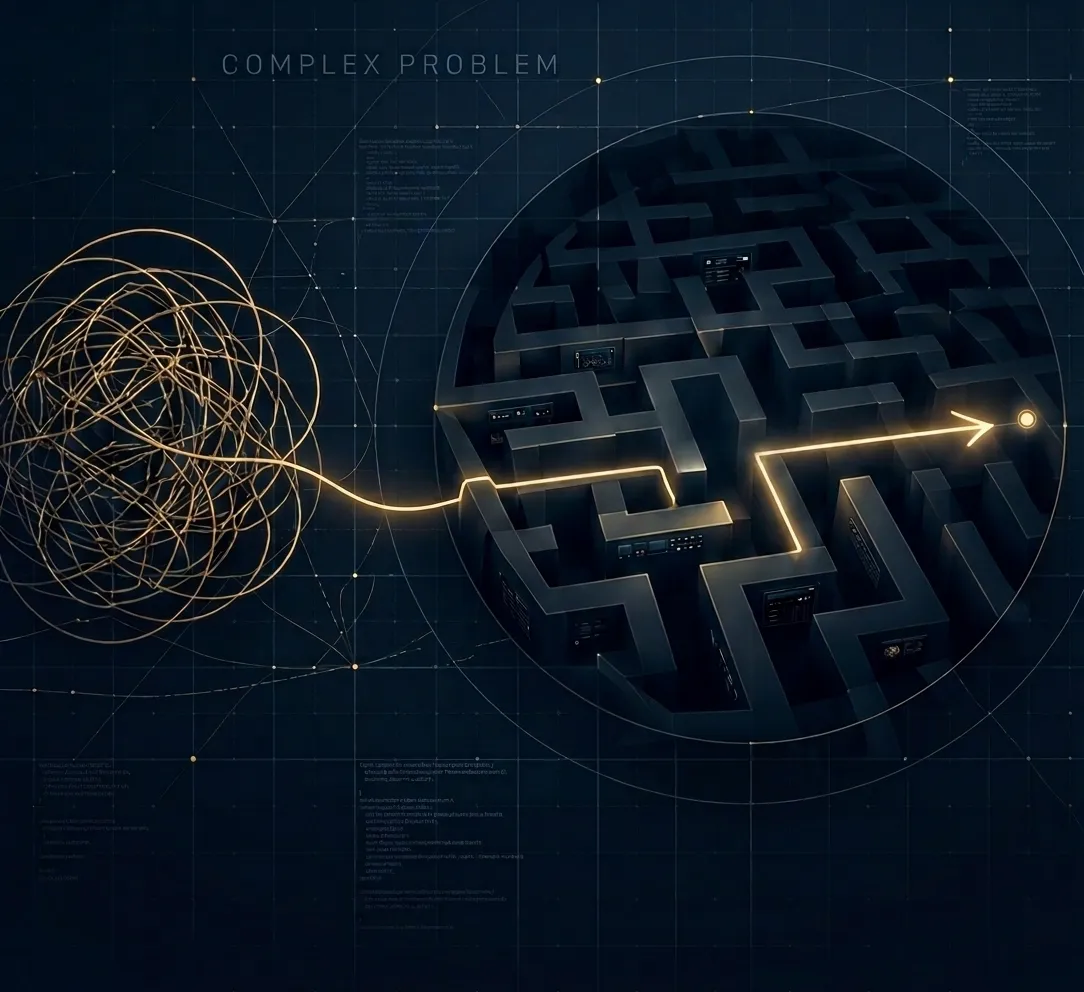
When does it make sense?

When spreadsheets, manual updates, or disconnected tools are eating time that could go toward higher-value work.

When a process depends on multiple spreadsheets, files, or manual updates.
When a significant amount of time goes into gathering, copying, consolidating, or preparing information.
When you need metrics that are more dynamic, interactive, and accessible.
When the information needed to manage a process is scattered across different sources or tools.
When existing off-the-shelf solutions don't fit well with how the organization works.
When there's a specific need for automation, integration, an internal application, or the use of artificial intelligence.

What do we do?

We design digital solutions tailored to the process itself — not the other way around — automating and connecting what actually adds value.

We design and build digital solutions tailored to the process and the needs of the people who'll use them.

We start from how the operation actually works and analyze which tasks can be simplified, which information can be integrated, and which parts of the process can be automated.

A solution might centralize information, automate calculations and updates, connect different data sources, structure records and controls, generate metrics automatically, or incorporate AI capabilities when they add value.

We're not looking to swap one spreadsheet for another tool. We're looking to evolve the way people work toward solutions that are more integrated, automated, and interactive, designed around the process itself.

How do we do it?

We start from how people actually work, then define, design, integrate, automate, and roll out the tool step by step.

We start from the operation, not from a predetermined technology.

Together with the users, we understand how they currently work, what information they use, what tasks they perform, what decisions they need to make, and what limitations they run into with existing tools.

Need
Definition

We pin down what the solution needs to solve, who will use it, what information it needs, and what constraints exist.

Process
Design around the operation

We design the tool around the working logic that already adds value, avoiding unnecessary changes to the process just to fit a standard solution.

Data
Information integration

We connect and structure data, files, or systems to reduce duplication, manual consolidation, and manual transfers.

Execution
Automation

We cut down on repetitive tasks, calculations, updates, or information transfers that don't need manual work.

Management
Visualization and control

We turn data into metrics, interactive dashboards, alerts, and tools that make tracking and decision-making easier.

Real-world use
Validation and rollout

We test the solution with users, incorporate adjustments, and roll it into day-to-day operations progressively.

Keep what works. Simplify what creates extra work. Automate what doesn't need to be done by hand. The solution can evolve later with new features whenever there's a real need for them.

What do we deliver?

From a single internal app to a full set of connected dashboards, automations, and integrations.

The outcome depends on the nature and scope of the project. The solution might cover one very specific need or bring several elements together into a single tool.

Internal applications tailored to specific processes.
Tools that replace or reduce dependence on multiple spreadsheets.
Automation of tasks, calculations, and information flows.
Interactive dashboards and metrics for tracking and decision-making.
Integrations between data, applications, files, or systems.
AI-based features and assistants when they're the right fit.
Need

Defining what work we want to simplify, for whom, and what the tool needs to deliver.

Solution

Designing, building, integrating, and validating a tool tailored to the process.

Rollout

Rolling it into day-to-day operations, with support to make sure it works in its real context.

Depending on the project, we can support the full journey or step in only for the phases where our help is needed.

What result can you expect?

A functional, proportionate tool tailored to how the organization really works.

A digital solution tailored to a specific need and designed to fit into the reality of the operation.

Reduce manual work tied to gathering, processing, and updating information.
Lower dependence on multiple spreadsheets, files, and disconnected tools.
Have information and metrics that update more automatically and interactively.
Integrate data and processes that currently require manual transfers.
Have a tool that's tailored to how the organization actually works.
Free up time for higher-value work through automation and new digital capabilities.
ResultA functional, proportionate solution tailored to how the organization really works.

Example projects

From an internal app replacing spreadsheets to interactive dashboards and AI-based features.

Replacing multiple spreadsheets with an internal management application.
Interactive dashboards for productivity, operations, or supply chain.
Automation of reporting and information consolidation.
Digital tools for operational planning and tracking.
Digitalization of records, controls, and forms.
Integration of data from different files, applications, or systems.
Automation of information flows and administrative tasks.
Custom applications for processes not well covered by off-the-shelf solutions.
Adding AI assistants or features on top of existing processes and information.

Continuous improvement

Design and implement concrete process improvements to increase efficiency, stability, and management capability.

What's the situation?

Sometimes the need is already clear — the challenge is turning it into a concrete, implemented improvement.

There are situations where the organization already knows which process or area it wants to act on, and needs to turn that need into a concrete improvement.

It might involve productivity problems, long cycle times, bottlenecks, variability, a lack of standardization, uneven workloads, recurring errors, coordination difficulties, or processes that have evolved without ever being structurally reviewed.

There can also simply be an opportunity to simplify a way of working, increase capacity, improve flow, or establish a more robust way of managing the operation, even without a critical problem.

The goal is to act on a specific need and make sure the improvement doesn't stay just a proposal, but is actually incorporated into the operation.

When does it make sense?

When there's a specific process to improve and opportunities need to become real, implemented changes.

When there's a specific process or area whose performance you want to improve.
When opportunities have been identified and need to be turned into actions and implemented.
When there are times, movements, waits, or activities that can be simplified.
When a process needs better stability, standardization, or coordination.
When capacity, workloads, resources, or how the operation is organized need to be reviewed.
When you want to roll out a new way of working and make sure it holds up over time.

What do we do?

We design and implement improvements tailored to the process, its goals, and the people who work in it.

We design and implement improvements tailored to the process, its objectives, and the people who work in it.

We start from the current situation and the improvement being pursued. We analyze the relevant causes and constraints, define alternatives, and develop a new way of operating together with the organization.

Depending on the need, the intervention might address working methods, timing and sequencing, workload and resource distribution, material or information flows, planning, operating standards, metrics, management routines, or digital tools when they complement the improvement.

Lean and other continuous improvement methodologies are part of our toolkit, but they don't dictate the solution. We apply whichever concepts and techniques add value in each situation.

How do we do it?

A hands-on cycle — analyze, design, test, implement, measure, and consolidate — scaled to the size of the improvement.

We work directly on the process and with the people involved in it.

We place special importance on understanding how the work is actually done, cross-checking it against data, and designing improvements together with the people who know the operation.

Analyze
Understand the process

We dig into the specific process — its data, methods, times, workloads, constraints, and current way of working.

Design
Define the improvement

We propose alternatives and weigh their impact, feasibility, and implementation effort.

Test
Validate before scaling

When appropriate, we use trials, pilots, or phased rollouts to validate the new way of working.

Implement
Bring the change to the operation

We support the rollout of the changes and adjust standards, tools, organization, or management systems as needed.

Measure
Check the result

We define metrics that track progress and compare the result against the starting point.

Consolidate
Stabilize the new way of working

We put in place standards, metrics, and tracking mechanisms to help sustain the improvement after the project ends.

Analyze
→
Design
→
Test
→
Implement
→
Measure
→
Consolidate
Not every initiative needs to go through these phases with the same depth. The scope adapts to the size and complexity of the improvement.

What do we deliver?

A detailed process analysis, a redesigned way of working, and the standards and metrics to sustain it.

The outcome depends on each initiative, but it can include:

A detailed analysis of the process being improved.
Design of the future process or working method.
New operating standards and associated documentation.
Methods and time analysis, capacity, or workload and resource distribution.
Metrics, tracking mechanisms, and visual management tools.
Plans for implementing, tracking, and consolidating the new way of working.
Design

Defining the improvement, the new way of working, and the changes needed.

Implementation

Putting it into practice, testing, adjusting, and supporting the transition.

Consolidation

Metrics, standards, and tracking mechanisms that help sustain the improvement.

When simple improvements that can be applied right away come up during the project, we look to implement them without necessarily waiting for the initiative to fully wrap up.

What result can you expect?

A concrete, implemented, measurable improvement to how the operation runs.

A concrete improvement to the operation, designed to solve a real need and to hold up after the engagement ends.

Simplify processes and eliminate activities that don't add value.
Improve productivity, capacity, or resource utilization.
Reduce times, waits, variability, or errors.
Have clearer, more standardized processes and working methods.
Improve control through metrics, standards, and management routines.
Roll out a new way of working that's more likely to stick over time.
ResultA concrete, implemented, measurable improvement to how the operation runs.

Example projects

From a single quick win to a full productivity or standardization initiative.

Productivity improvement for a line, area, or process.
Methods and time analysis and optimization.
Reduction of bottlenecks, waits, and process times.
Standardization of working methods and operating processes.
Review of capacity, workload, and resource sizing.
Improvement of production, logistics, or administrative flows.
Design and rollout of metrics and management routines.
Improvement of planning, coordination, and operational tracking.
Redesign and rollout of processes to reduce errors, variability, or activities that don't add value.

Example engagements

Illustrative examples of the kind of work we do. Replace with real case studies as they become available.

Productivity diagnostic

Manufacturing plant

OEE dashboard

Custom AI tool

5S rollout

Continuous improvement

Digitalization roadmap

Process & systems mapping

Let's talk about your project

Send us a short note about what you're building — we usually reply within a business day.

01We understand the context

What's happening, where it's happening, and what impact it has on the operation.

02We assess the fit

We'll tell you clearly whether we can help and what kind of intervention would make sense.

03We define the next step

If there's a fit, we set up an initial conversation and pin down scope and objectives.

Email us

Based in Madrid, working with clients across Europe.

Mission and vision

What we want to contribute, and where we want to go.

01

Mission

Help organizations run better.

We improve productivity, processes, and decision-making by combining operational knowledge, continuous improvement, and technology. We design solutions proportionate to each problem and support their implementation when it adds value.

02

Vision

Become a reference in operational and digital improvement for companies looking for real results.

We want to build a consultancy recognized for its rigor, closeness, and ability to connect operations and technology, offering the same level of quality and judgment to organizations across Spain and Latin America.

  • Rigor
  • Practical mindset
  • Closeness
  • Technology with purpose
  • Results orientation

Work with us

We're looking for people who want to solve real problems.

We want to build a team with complementary profiles in operations, continuous improvement, technology, and business development.

We're interested in people with judgment, curiosity, and the ability to combine analysis with execution — people comfortable working with clients, data, processes, and digital tools.